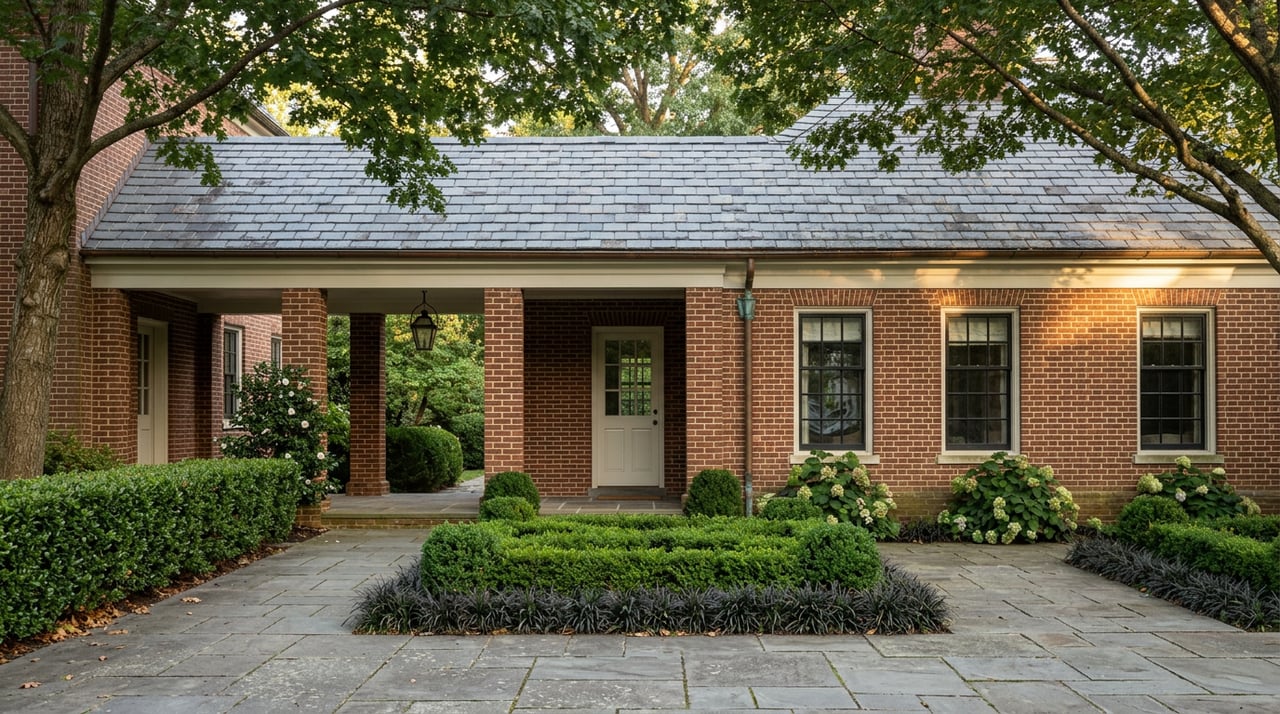
Historic Brookhaven Home Prices: Why the Numbers Vary
August 20, 2026
August 20, 2026
Ask two agents for the median home price in Brookhaven and you may get two answers that are hundreds of thousands of dollars apart, both correct. One will quote you a citywide DeKalb County figure that moved from $980,000 in April to $1.45 million in February, swinging by nearly half a million dollars in a matter of weeks. The other will point you toward a narrower slice of estate homes clustered around a private golf course, averaging closer to $1.7 million. Neither agent is wrong. They are describing two different places that happen to share a name, and understanding why matters more than any single number on the page.
The reason is not market volatility. It is jurisdiction. Historic Brookhaven spans three separate governments: the Buckhead district of Atlanta in Fulton County, a portion of Sandy Springs, and the City of Brookhaven itself, which sits in DeKalb County. That last detail carries a small irony worth sitting with. The City of Brookhaven was not incorporated until 2012, and when it chose a name, it borrowed one from the older, historic neighborhood already sitting inside its future boundaries. The newer municipal government took its identity from the community it now partially contains.
According to Wikipedia's entry on Historic Brookhaven, the neighborhood's boundaries run:
Inside that boundary, three separate sets of local rules apply depending on which side of an internal line a given lot falls on. That is a meaningfully different situation than most Atlanta neighborhoods, where one city government, one permitting office, and one zoning code cover the entire area.
The practical result shows up first in schools. Homes on the Atlanta side zone to Sarah Smith Elementary, Sutton Middle, and North Atlanta High. Homes on the DeKalb side zone to Ashland Park Elementary and Chamblee Middle and High. Two houses separated by a single cross street can sit in entirely different school systems, a detail that rarely surfaces until a buyer is deep into comparing floor plans and has stopped thinking to check.
Here is where the confusion compounds. When a report cites "Brookhaven's median sale price," it is almost always describing the citywide DeKalb market, which includes Ashford Park ranches, Town Brookhaven condos, and Dresden Drive infill alongside the historic estate section. That citywide figure moves fast because it mixes product types. Single-family median sold price in that broader market climbed to $1,450,000 in February 2026, then settled to $980,000 by April, with median days on market swinging from 40 down to 7 across those same two months. A market that thin and that mixed will produce headline numbers that look erratic even when nothing unusual happened. It just means a different slice of inventory closed that month.
Historic Brookhaven specifically behaves differently, and more slowly. In Redfin's tracking through this summer, the average sale price in the historic district sits near $1.7 million, down 2.3 percent from a year earlier, with homes averaging close to six weeks on market rather than days. Redfin also classifies the historic district as only "somewhat competitive," a noticeably calmer read than the citywide swings above. That gap makes sense once you account for how few closings happen inside the historic core in any given month. A market that thin means one or two significant estate sales can move the average considerably without signaling a broader repricing.
The lesson for anyone comparing Historic Brookhaven to another close-in neighborhood: ask which dataset you are looking at before you compare it to anything. A number describing the DeKalb city as a whole and a number describing the narrower estate district ringing the golf course are not the same market, even though a quick search will hand you both under the same neighborhood name.
The value driver locals already understand is the Capital City Club. The club was chartered in 1883. Golf pro Herbert Barker laid out nine holes at the Brookhaven site in 1911, and the course opened in January 1912 as Atlanta's second golf course after East Lake. Capital City Club leased the course in 1913, purchased it in 1915, and expanded it to eighteen holes at the time of purchase. The current clubhouse, designed by Burge and Stevens, was built in 1928, and the club along with its surrounding estate homes was added to the National Register of Historic Places in 1986, the designation that gave the neighborhood its official name.
You can buy the lot that backs the seventh fairway. The membership is not for sale with it.
Proximity to the club and its golf course is the single clearest premium in the neighborhood, and it is a premium on land, not a package deal. Membership is invitation-only, and by some estimates roughly half of Historic Brookhaven residents belong to the club, which means the other half live beside a private amenity they cannot use on demand. That distinction matters for anyone weighing whether a golf-adjacent lot is worth the asking price for reasons beyond the view.
That premium also explains the wide price spread inside the historic district itself. Older brick ranches on the neighborhood's edges start well under a million dollars, while estate-scale lots close to the clubhouse and fairway views run into the multi-million range, with Tudor and Georgian Revival architecture concentrated closest to the course.
The jurisdictional split has a second consequence that surfaces during renovation and rebuild planning, not just at closing. Portions of Historic Brookhaven inside Atlanta's Fulton County boundary fall under Atlanta's zoning and permitting process, and sections of the neighborhood carry a historic overlay that requires architectural review before exterior changes.
Portions that fall inside the City of Brookhaven follow that city's own rezoning and permitting system, a process the city has run independently since its 2012 incorporation, with records maintained separately from the DeKalb County cases that predate it. That city also enforces a tree ordinance that shapes what can be cleared on a lot and what a rebuild will cost, distinct from whatever rules apply a few streets over on the Atlanta side.
For a buyer planning any exterior work, whether that means popping the roofline on an older ranch or clearing lot canopy ahead of new construction, the answer to how long permitting will take and what review is required depends on which government has jurisdiction over that specific parcel. That is not a detail most out-of-market buyers think to ask, and it is exactly the kind of friction that surfaces mid-transaction rather than during the initial search.
If you are cross-shopping Historic Brookhaven against other close-in Atlanta enclaves, the useful question is not "what does Brookhaven cost." It is "which Brookhaven, and whose rules apply to this specific address." Confirm the school assignment before you fall for a floor plan. Confirm which government issues the building permit before you budget a renovation. And treat any headline median price with real skepticism until you know whether it describes the citywide DeKalb market or the narrower estate district ringing the golf course, because those two numbers will keep moving independently of each other.
For a closer look at the neighborhood's architecture and what buyers should weigh before an offer, see our guide to Historic Brookhaven's architectural character and our companion piece on preparing a Historic Brookhaven estate for today's buyer. You can also browse current Historic Brookhaven listings or explore the full neighborhood profile.
Is Historic Brookhaven part of the City of Brookhaven? Only partially. The neighborhood spans the Buckhead district of Atlanta in Fulton County, a section of Sandy Springs, and part of the City of Brookhaven in DeKalb County. The city took its name from the older neighborhood, not the reverse.
Will my Historic Brookhaven home be zoned to Atlanta Public Schools or DeKalb County Schools? It depends on exactly which side of the internal boundary the property sits on. Confirm the specific school assignment for any address you are considering rather than assuming based on the neighborhood name alone.
Why do median price reports for Brookhaven vary so much month to month? Citywide DeKalb figures blend condos, mid-century ranches, and estate homes into one number, so a handful of high-end or low-end closings can swing the median significantly in a market with limited monthly sales volume. Historic Brookhaven's own estate-district pricing moves on a separate, slower track tied more closely to golf course proximity and lot scale.
If you are weighing Historic Brookhaven against another intown or close-in suburban address, Mary Stuart Iverson can walk through the specific jurisdiction, school assignment, and permitting path tied to any address you are considering. Schedule a free consultation to get a clear read on what your money actually buys before you write an offer.
Stay up to date on the latest real estate trends.
Mary Stuart Iverson is a member of Who’s Who In Luxury Real Estate / LuxuryRealEstate.com, an international network of real estate professionals operating in 195 countries and representing the finest residential luxury estates and property brokerages in the world.
Mary Stuart Iverson
1819 Peachtree Rd NE Ste 100 Atlanta GA 30309